
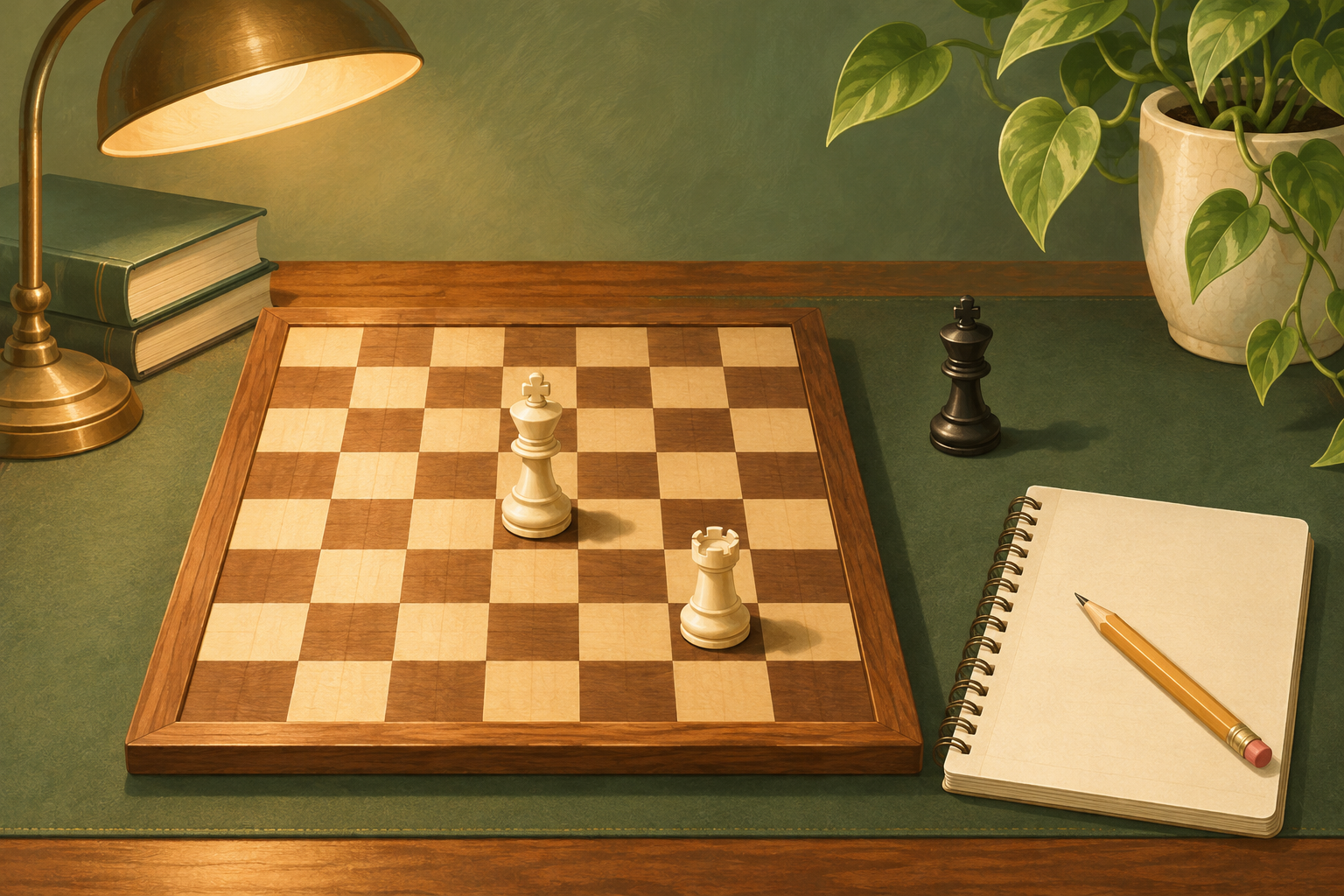
Chess endgame training is easier to organize when each session has one clear finish to practice. Choose a position, explain the plan before moving, and replay the first decision you cannot explain. A short session can be useful without treating the result as a rating test or promising a particular improvement.
This routine is for beginners using the ChessStep endgame trainer. Start with a basic mating task you have already studied, rather than opening several unfamiliar endings in succession.
Key takeaways
- Practice one kind of finish during the session.
- Check the defending king's legal moves before every move.
- Repeat the decision that caused trouble, not only the final checkmate.
Choose a task with a recognizable goal
King and queen versus king is a useful starting task if you know how the pieces move. Your goal is to restrict the opposing king, bring your own king into a supporting role, and finish with a legal checkmate.
If you already understand that ending, choose a rook ending or another topic from the trainer. Pick by the skill you want to practice. The displayed difficulty describes a learning task, not your rating against human opponents.
For the full mating method, read the queen and king checkmate guide. This routine concerns how to practice that method, rather than replacing its position-by-position explanation.
Say the plan before making the move
Before moving, describe the intended change in one sentence. For example: “I want to reduce the king's space while keeping a legal move available.” Then check whether your candidate actually does that on the board.
Look at the squares controlled by both kings and your remaining piece. Do not assume the enemy king can capture a protected piece or enter a controlled square. Equally, do not assume that a king with no safe square is automatically checkmated.
This verbal check is a suggested exercise. Keep it brief enough that you can use it on every move without turning the session into transcription work.
Distinguish checkmate from stalemate
Checkmate means the king is in check and has no legal escape. Stalemate means the player to move has no legal move while the king is not in check. The distinction matters especially when a queen has removed almost all of the defending king's space.
Before a quiet move, ask two questions: “Will the king be in check?” and “What legal move remains?” Answer using the resulting position, not the current one.
If you cannot identify the answer, slow down. Capturing extra space is only helpful when the resulting position still serves your goal.
Illustrated worksheet
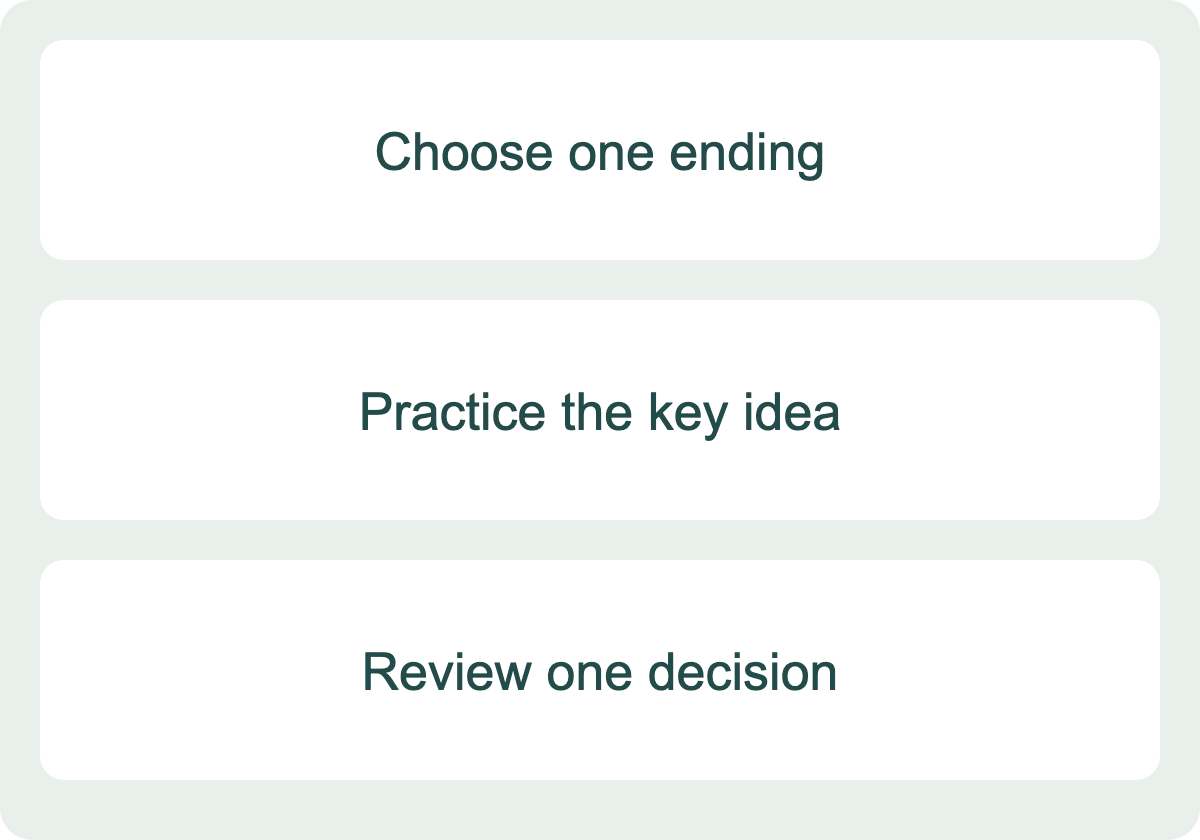
This diagram summarizes the example in this article.
Use help, then repeat without it
The trainer offers clues and takebacks. Use a clue when you are stuck, but explain what it changed before continuing. If you simply follow the suggested move, you may finish without learning why it worked.
After a stalemate or another mistake, return to the decision that caused it. Identify the square you overlooked and choose another candidate. Repeat the same task without the clue once you can describe the correction.
The game-review guide gives a broader method for turning a confusing move into a concrete question.
Finish with one practice note
Record the task, the first unclear decision, and a cue for the next attempt. “Check for a legal king move before a quiet queen move” is more useful than “be more careful.”
You can stop after one explained correction. If you continue, repeat the same type of finish from another available position and see whether the cue still helps. Move to another topic when you can explain the plan, including the opponent's options, instead of only remembering a sequence.