
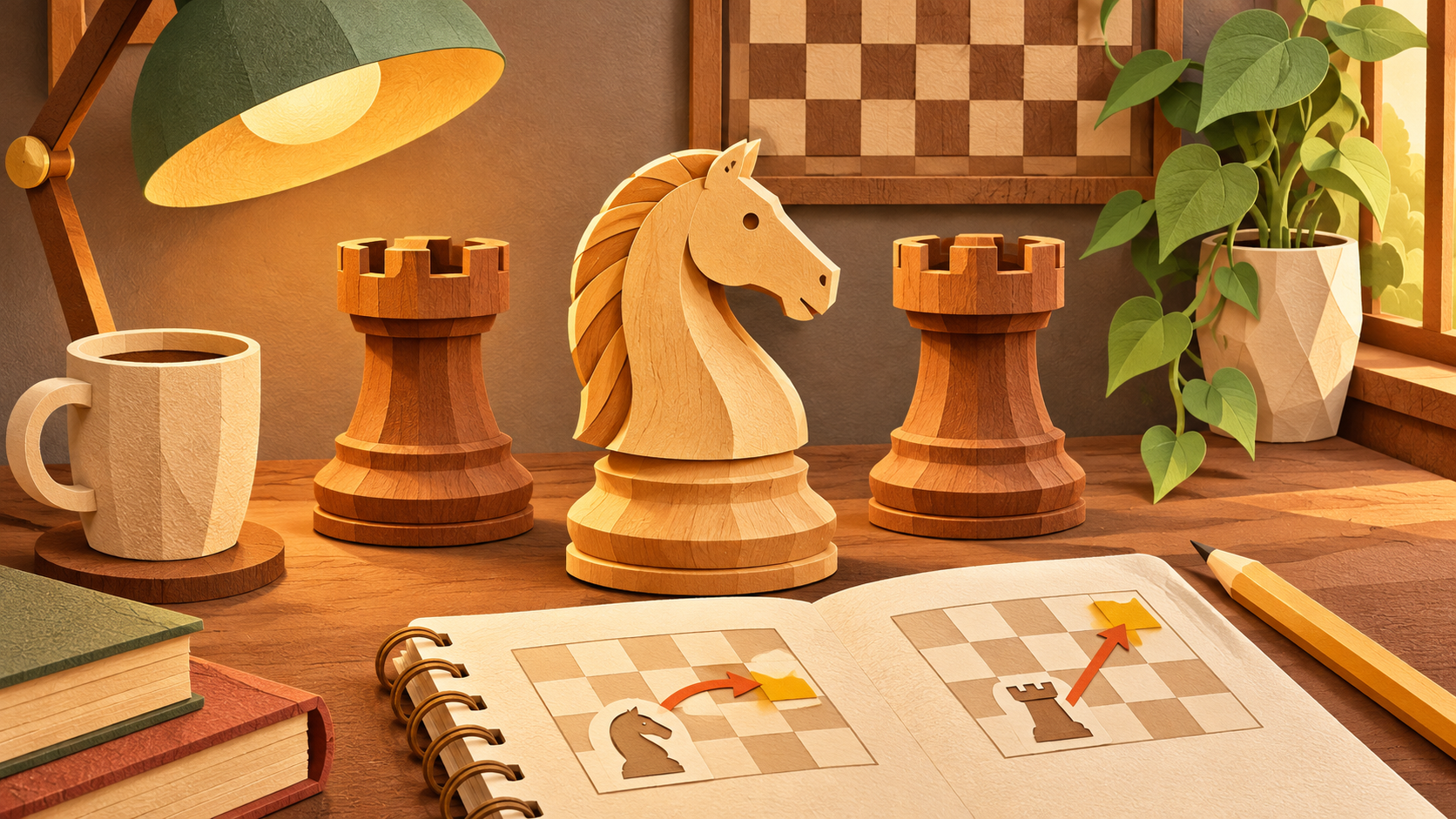
Chess tactics for beginners start with a simple habit: look for checks, captures, and threats before choosing a move. A fork attacks two targets at once; a pin limits a piece because moving it exposes something more valuable. Learn to notice the relationship between pieces, then calculate the opponent's best reply.
Key takeaways
- Look for undefended pieces and forcing moves.
- Verify every tactic against the opponent's strongest response.
- Review missed opportunities from your own games.
Begin with loose pieces
A loose piece has no defender. If a piece can be captured without a favorable recapture, it may become a tactical target. Before each move, identify loose pieces on both sides. A defended piece can also be vulnerable when its defender is overloaded or can be removed.
Use the same check after your opponent moves: what changed, which line opened, and what is now attacked? This takes only a moment and catches many preventable mistakes.
Spot a fork
A fork occurs when one piece attacks two or more targets. Knights are famous for forks because they jump, but pawns, bishops, rooks, queens, and even kings can attack multiple targets at once. A check-and-attack fork is forcing because the checked king must respond.
Do not stop when you see the double attack. Can the opponent capture the attacking piece, move a valuable target with check, or create a stronger threat? Calculate the complete sequence before deciding that it wins material.
Understand a pin
A pin exists when moving a piece would expose a more valuable piece behind it along a line. In an absolute pin against the king, moving the pinned piece would be illegal if it exposes the king to check. A relative pin can be broken legally, although doing so may lose material.
Identify the attacking piece, the pinned piece, and the target behind it. Then check whether the line can be blocked, the attacker captured, or the pinned piece defended. A pin is a constraint, not automatically a win.
Train with a repeatable routine
Choose a small set of beginner puzzles. For each position, name the targets before moving, list checks and captures, and calculate one plausible defense. If you miss the idea, reset the board and explain why your first choice failed. Accuracy and a clear explanation matter more than a large puzzle count.
Next, play a short game against a computer and look for the same patterns. The computer-practice guide can help structure the session. In your review, save one position where you missed a fork, pin, or undefended piece.
Turn a mistake into a question
Instead of writing "I blundered," write "Which piece was undefended before I moved?" or "What check did I overlook?" Revisit the position the next day without the answer. The game-review guide offers a process for turning that question into practice.
Tactics improve through careful observation and calculation. Start with a few patterns, check the opponent's reply, and build your collection from real games.